

The Temple of Edfu: Legacy of Horus in Upper Egypt
As a Ptolemaic period temple Edfu Temple dedicated to Horus stands as one of the most complete temples that have survived to the present day. The monument provides exceptional access to ancient Egyptian religious practices and architectural standards through its large size and perfect state of preservation. The temple construction follows a south-north direction which makes it the main feature of the Tell Edfu archaeological site.
The building programme began in 237 BCE under Ptolemy III rule and continued until the end of his dynasty. The project reached its final stage in 57 BCE when workers completed the last decorative elements and doors after nearly two centuries of work.
Monumental Design and Sacred Symbolism
At the entrance visitors find a large pylon which stands between two towers that used to display flagpoles and wooden doors. The elements functioned as more than decoration because they carried strong symbolic meaning which demonstrated divine protection and royal power.
Celebrations Honouring the Falcon God
Edfu functioned as the main site for religious celebrations especially during the Festival of the Living Falcon. Through their ceremonies which used sacred falcons to symbolize Horus the event confirmed both kingship and divine order. The temple turned into an active worship space through public rituals and processions and offering activities.
The Courtyard and Communal Worship
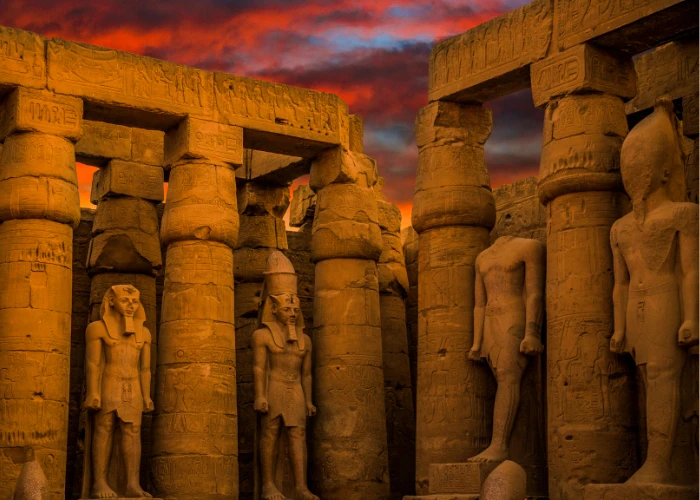
Temple visitors reached a large courtyard which featured rows of columns. The reliefs depict the Festival of the Joyous Union which commemorates the sacred wedding between Horus and Hathor. The temple ceremonies extended into the community because they allowed local residents to take part in the events.
Progressing into the Sacred Core
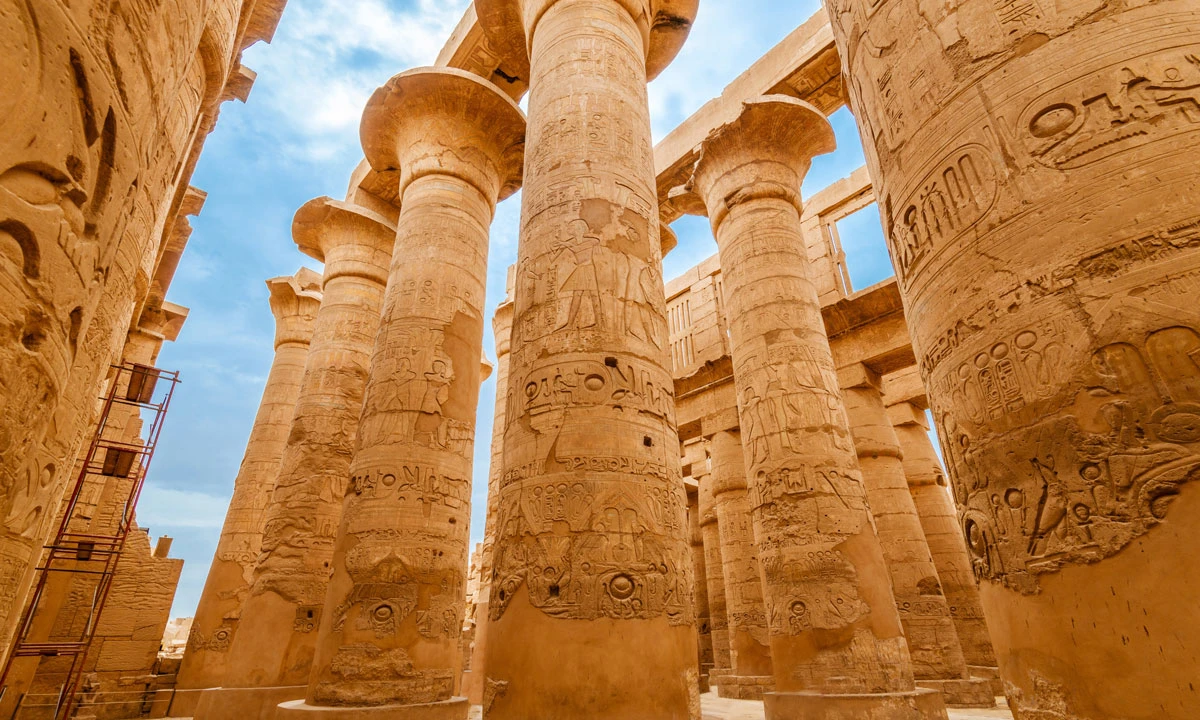
The temple begins to restrict its passageways while displaying its sacred meanings through its architectural design. The hypostyle halls feature richly carved columns, celestial ceilings, and priestly chambers used for preparation and ritual study. The design of each area enables people to experience sacred time which connects them to divine space.
The Sanctuary of Horus
The sanctuary served as the temple's spiritual center which contained the sacred bark and Horus's cult statue. A surviving granite shrine from an earlier dynasty highlights the continuity of worship at this site. The daily ceremonies conducted at this location strengthened the relationship between gods and humans.
Chapels and the Nile Measurement Well
A series of side chapels honoured other deities associated with Horus. The priests used a nilometer which existed outside the temple boundaries to track Nile flood levels because it showed how ancient Egyptians linked their religious beliefs with their natural environment and their life needs.




-webp.webp "7-Day Cairo & Nile Cruise Honeymoon Tour in Egypt")












-webp.webp "10-Day Classic Tour to Cairo, Aswan, Luxor, and Hurghada")






-webp.webp "Tour to Edfu and Kom Ombo from Marsa Alam")




-webp.webp)
-webp.webp)

-webp.webp)