

The Legacy of Egyptian Civilization: The Ancient, the Medieval, and the Modern
The Egyptian civilization is one of the most interesting ones in human history. It has lasted for over thousands of years and has left an indelible impression on something in the region that continues to inspire so many. From the grandiose ancient monuments and spiritual beliefs, through the cultural and intellectual prosperity of the medieval period, to modern Egypt which epitomizes a blend of tradition and modernity, every one of the eras have added to the great narrative of our magnificent country. The past history of Egypt helps one to understand the tremendous effect that this land will always assert on art, enlightenment, culture, and the practical group of politics today.
1. Ancient Egypt: The Birth of a Timeless Civilization
One of the oldest civilizations in the world, Ancient Egypt existed from around 3100 BCE along the banks of the Nile River. The Egyptians erected temples and pyramids, invented hieroglyphics, and established powerful pharaohs who influenced the spheres of religion, art, and politics.
Amongst others, the Great Pyramid of Giza, Tutankhamun's treasure, and the Egypats' contributions to the fields of medicine, astronomy, and mathematics are all highly recognized the great achievements of the civilization. The Egyptians' strong belief in the afterlife led them to create more than just sophisticated tombs; these tombs were even stocked with sacred texts and treasures, so the inevitable passage of time never extinguished their spirituality.
2. Medieval Egypt: A Center of Culture and Knowledge
Egypt during the medieval period was a complex and diverse place, dominated by different rulers and foreign powers at different times. The Islamic conquest of Egypt in the 7th century turned it into a significant place for Islamic culture and learning.
Cairo of that era was a lively and noisy city filled with splendid mosques, schools, and marketplaces. The scholars worked on the ancient Egyptian knowledge and continued to develop it further in the fields of science, philosophy, and medicine. Egypt remained a significant connector of the three continents: Africa, Asia, and Europe even though there were frequent political changes.
3. Modern Egypt: Nationhood, Change, and Development
The modern Egypt of the 19th and 20th centuries is a result of reform, nationalism, and revolution. Leaders like Muhammad Ali Pasha modernized the economy, the military, and the education system.
The 1952 Revolution brought to an end the era of foreign domination, and Egypt succeeded in achieving her independence. Egypt today is conscious of its history but is also forward-treading in technology, culture, and communication with the world. Millions of tourists come every year to see the wonders of the past while discovering art and culture in contemporary Egypt.
Key Facts About Egyptian History
2. Egypt: One of the Oldest Civilizations
Egypt has lived for over 5,000 years. It all started around 3100 BCE when Pharaoh Narmer (Menes) unified Upper and Lower Egypt. The Nile River generated fertile land for farming, and this allowed civilization to grow. Ancient Egypt experienced many dynasties, leading to a rich amalgamation of cultural threads, including religious distinctions and political growth. The Age of Pyramids during the history of Egypt came into work during the Old Kingdom period; the Middle Kingdom was focused on art and consolidation, while the New Kingdom saw what was termed as the golden age of Egypt.
2. The Great Pyramids: Wonders of the Ancient World
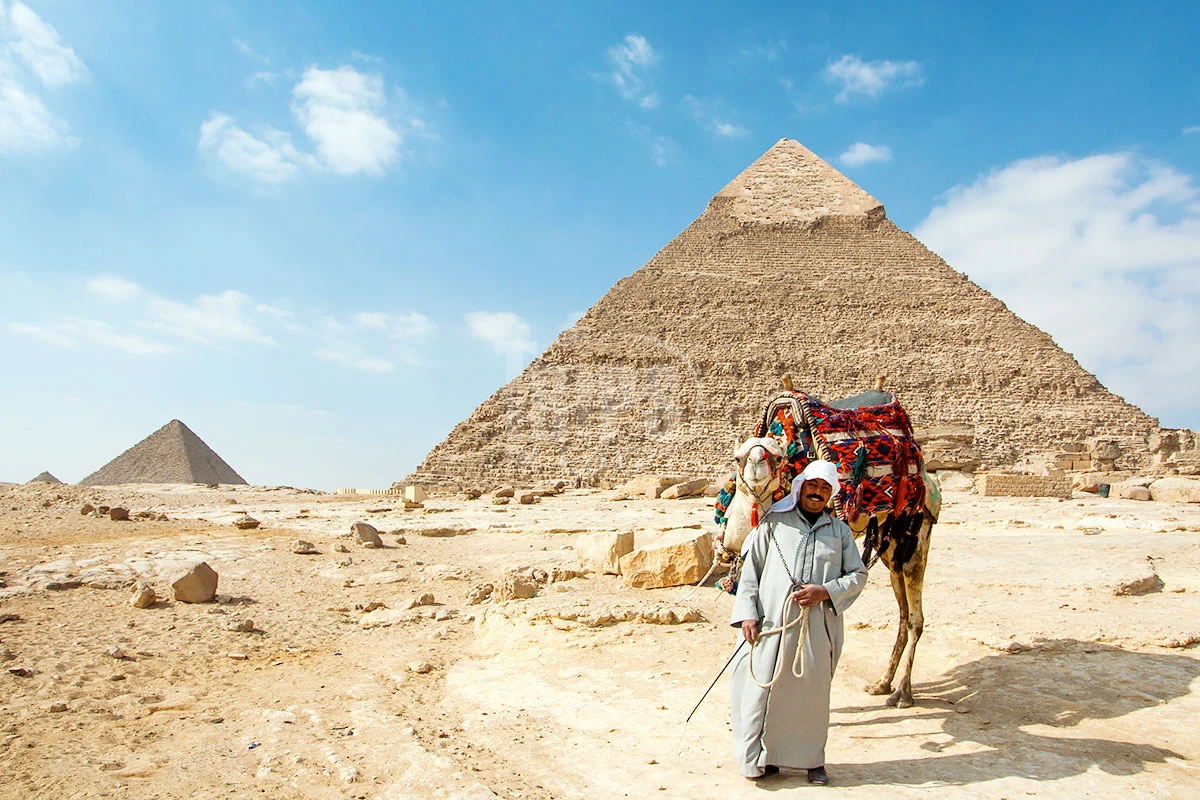
The Great Pyramid of Giza, which was constructed by Pharaoh Khufu around 2560 BCE, is a brilliant demonstration of the engineering expertise of the Egyptians. It rose to a height of 146 meters, which allowed it to hold the record of the tallest human-made structure in the world for almost 4,000 years. The construction involved millions of limestone blocks and the design was that of a mausoleum to be secure the king's body along with his valuables for the afterlife. The Sphinx, which has the body of a lion and the head of a pharaoh, is the guardian of the complex. The world has recognized and acknowledged these monuments as the epitome of Egypt's proficiency and religious legacy.
3. Hieroglyphics: The Writing of Pharaohs
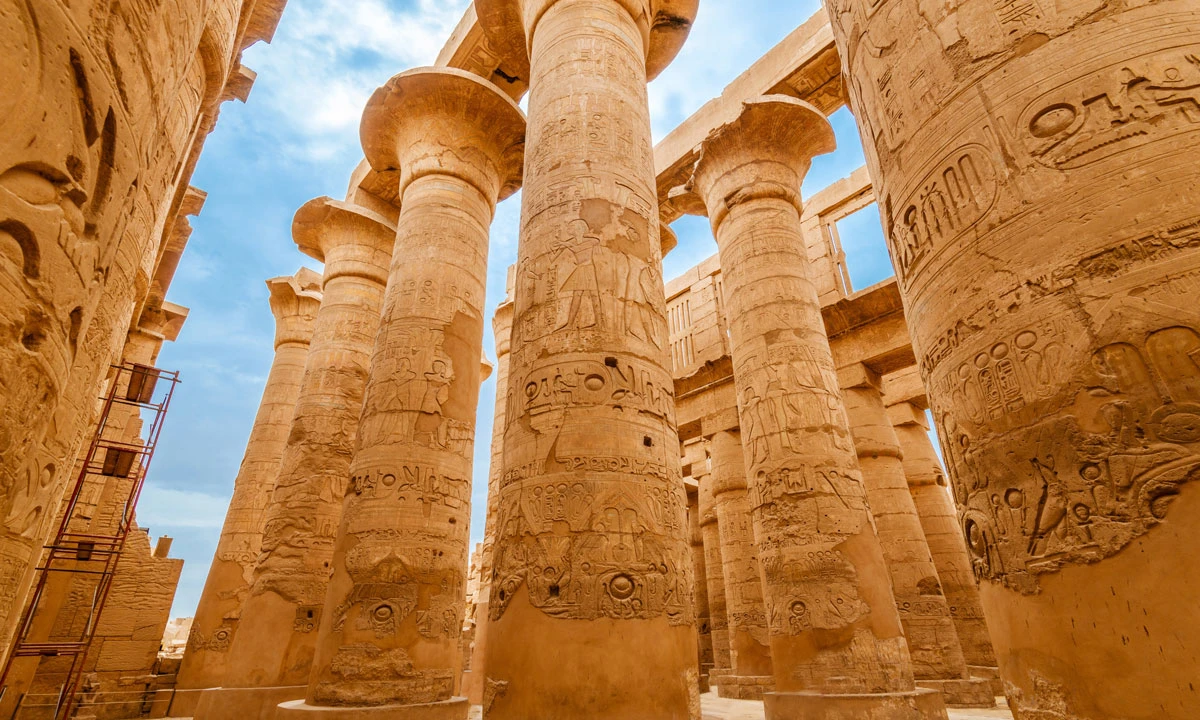
Hieroglyphics, an elaborate form of writing, consisted of more than seven hundred symbols for representing sounds, objects, and ideas. Egyptians thought this writing system as holy, and they engraved it onto their temples, tombs, and monuments. For centuries, there was the secret of persons’ inability to comprehend this script. In 1799 the discovery of the Rosetta Stone ultimately enabled scholars to decode the hieroglyphics, further unveiling its history, religion, and everyday life.
4. Advances in Medicine and Science
Ancient Egyptians were proficient in medicine, science, and mathematics. The medical records show their writing was extensive and not only limited to anatomy, surgery, and herbal remedies. Practitioners dealt with cuts, teeth, and even did minor surgical procedures. They turned their gaze towards the sky and the Nile's inundations to establish their calendars and put their skills in mathematics to work for architectural purposes and various other things like land measurement and the building of gigantic pyramids as their tombs. The civilizations after them were значительно influenced by their knowledge.
5. Pharaohs: God-Kings of Egypt
Pharaohs were not only rulers but also gods in the people’s eyes. They were responsible for order in the empire and the irrigation systems and were also the heads of the army, religion, and administration. Among the most known pharaohs are Tutankhamun, Ramses II, and Cleopatra VII. They became the embodiment of power, faith, and stability casting a long shadow of their presence and ruling over Egyptian history for thousands of years.
How Has Egypt’s History Survived Over 5,000 Years?
The fact that Egypt’s history has lasted for millennia is really remarkable. The Nile River provided people with food, water, and security while the deserts played a role in keeping buildings and monuments from decaying. Egyptians were very much attached to their traditions, hence, they constructed solid stone structures and narrated their stories, beliefs, and achievements through writing. They also believed in life after death which was the main reason for the great effort to preserve tombs, corpses, and important texts.
Today, archaeologists find more and more temples, writing, and riches. These finds confirm that Egypt's history is not only in the past but also a living inheritance that continues to motivate and educate people all over the world.
Egypt is not only a country but a living museum of human accomplishments. The monuments, traditions, and tales still echo with the voices of gods and pharaohs and refresh the narratives for generations onwards. Talk about these facts or better still pay a visit to Egypt; get through the pyramids, ride along the Nile, and get persuaded of the spiritual magic of a civilization splitting the wonder of the whole world.
-webp.webp "10-Day Classic Tour to Cairo, Aswan, Luxor, and Hurghada")



-webp.webp "3 Days Family Tours Egypt Explore the Best of Cairo & Alexandria")


-webp.webp)
-webp.webp)

-webp.webp)