

Istanbul, the largest and most mesmerizing city in Turkey, is truly unique in spanning two continents, Europe and Asia. Boasting a fabulous array of landmarks such as Hagia Sophia, the imperial Topkapi Palace, the magnificent Sultanahmet Mosque, and the vibrant Grand Bazaar, Istanbul has become an urban wonderland celebrated for its rich history, splendid architecture, and diverse cultures.Strolling through the colourful markets, enjoying the finest foods, and wandering through beautiful neighbourhoods that reflect both the great ages of Istanbul’s history and its modern spirit, visitors are met with surprises at every step. From ancient wonders to the city’s buzzing nightlife, Istanbul promises endless pleasure and stands as a must-see destination on any Turkey tour.
Istanbul: Location and Historical Importance?
Istanbul is Turkey's largest city and one of the most famous destinations in the world. It thrives on its antiquity and cultural pluralism and is renowned for being geographically placed on two continents, namely Europe and Asia. Istanbul is situated in north-western Turkey and follows the waterway of the Bosphorus dividing Europe on one end and Asia continent on the other and connecting the Black Sea to the Sea of Marmara. Istanbul is not technically the capital of Turkey, which is played by Ankara; but Istanbul is still referred to as the centre of culture and economy of Turkey. Istanbul's population exceeds 15 million at this juncture in history and always been a major cross road of trade, culture and civilizations. Formerly, it was the capital of the Byzantine Empire, under the name Constantinople, as well as later being the capital of the Ottoman Empire and has left quite an impressive monument.
Istanbul’s Historical Importance in World Civilisation
1- Byzantium in Ancient Times
Istanbul, founded by Greek settlers, in 660 BCE was under the name of Byzantium. It was established as a center of trade thanks to its strategic position between the Mediterranean Sea and the Black Sea and also as a link between Europe and Asia.
2- Constantinople, the Capital of Byzantine Empire
In 330 AD, Emperor Constantine the Great reestablished the city as Constantinople to make it the capital of the Byzantine Empire. In the centuries to come, it blossomed as an important pillar of Christianity, culture, and enlightenment. The erection of Hagia Sophia in 537 CE was a major milestone, being the largest cathedral in the world and a splendor of Byzantine architecture.
3- The Nucleus of the Ottoman Empire
With the Islamic capture of Constantinople in 1453 by Sultan Mehmed II, the Byzantine rule ended. For four centuries, the city became the Ottoman capital, during which imperialism continued to spread through Europe, Asia, and North Africa. The architectural beauties of the Blue Mosque, Topkapi Palace and Bazaar Grand, increased Istanbul in the eyes of Islam.
4- Religious and Cultural Importance
Istanbul was significant as a religious centre-Kes from Christianity and Islam-and as a cultural crossroads, marking its uniqueness. It has been the ecclesiastical site of the Eastern Orthodox Church for many years, but later it became an important Islamic city. Hagia Sophia, which had been a cathedral and became a mosque, reflected the cultural heritage shared by the city.
5- The Bridge Between East and West
For centuries, Istanbul has been the city that has breathed both Eastern and Western civilizations driving the forces in art, architecture, writing, and philosophy. It is the very richness and vitality of this city since its foundation through intercept cultural input as diversified as before from Greek through Rome, Byzantine, and the Ottomans.
6- Modern Day Importance
Today, Istanbul is one of the key global cities, preserving its age-old traditions, exhibiting the most modern of trends. Being the cultural and economic hub of Turkey, it represents the archetype of global multiculturalism in fields like tourism, trade, education, and the arts.
Must-See Landmarks and Cultural Highlights in Istanbul
1- Hagia Sophia
The Hagia Sophia, built-in 537 CE, originally served as a cathedral. Later, it was converted into a mosque from 1453 to 1931, then into a museum by Turkish Republic government. Its huge cupola, which appeared without support for the first time in architecture, is supported by a set of four pendentives that carry the weight of the entire domed hall into the corners of the supporting walls. The church was filled with collectible mosaics of the finest materials and workmanship. These mosaics follow the direction of the Byzantine tradition and illustrate the spirituality and devotion of Christianity. The mighty dome, intricate mosaics of religious scenes which span the religious and cultural historical periods from the very beginning of the Christianity of St. Paul, blending a few Western and Islamic features.
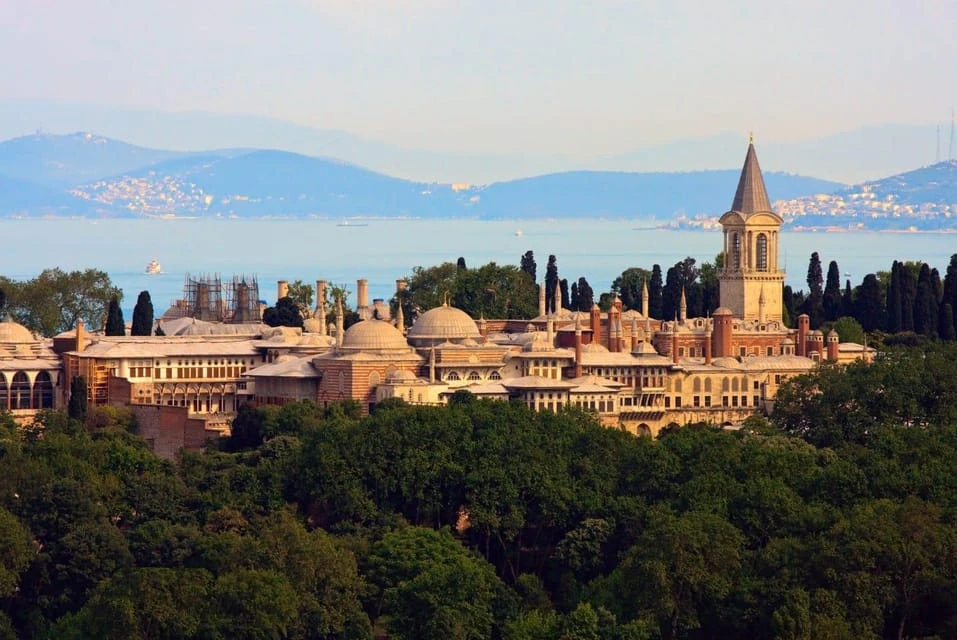
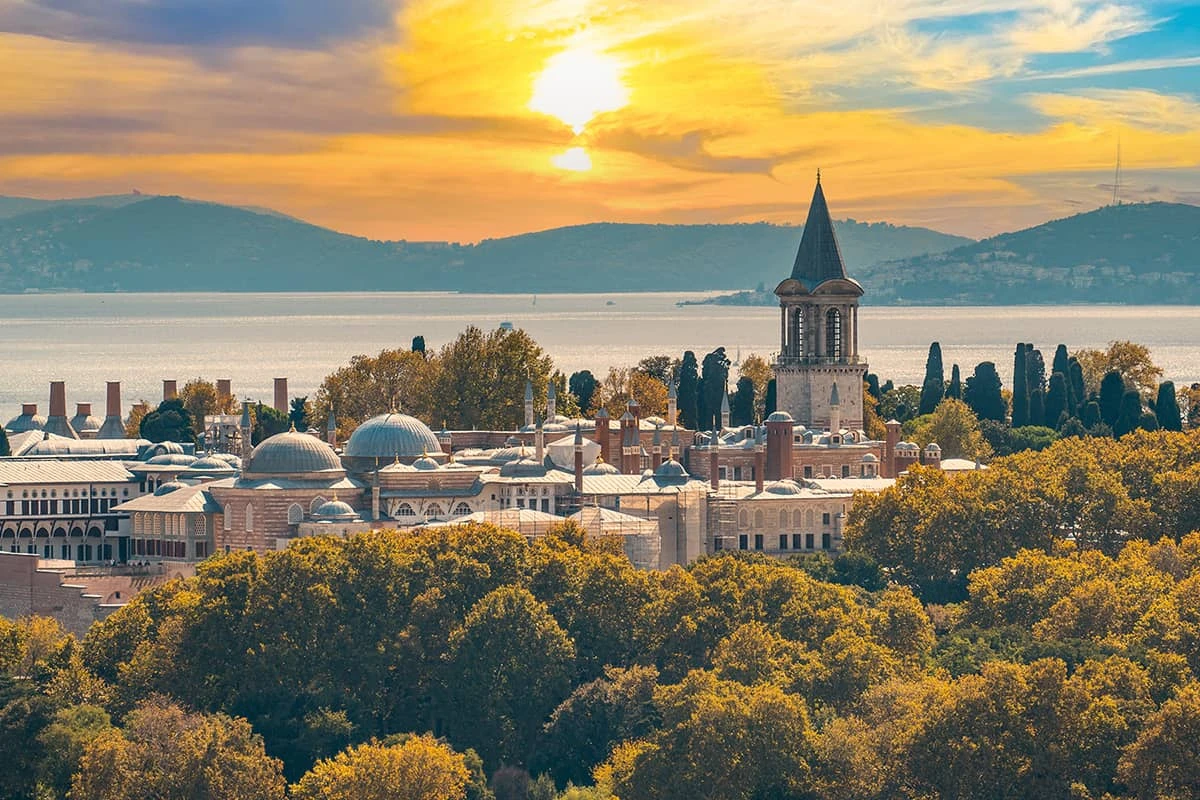
2- Topkapi Palace
An erudite building in Istanbul that formerly served as the official residence for Ottoman Sultans, it became a public museum in 1921. From 1461 to 1855, Topkapi Palace was the main residence and administrative headquarters of the-Ottoman Sultans. Although no longer the seat of the government, Topkapi Palace remained an integral part of Ottoman Imperial culture and was the focus of diplomatic and other ceremonial functions. The palace was built at the height of the Ottoman Empire in Istanbul.
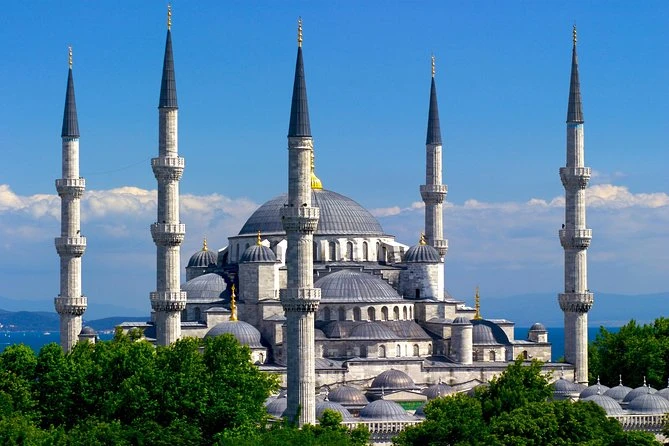
3- Mosque (Sultan Ahmed Mosque)
Designed by Mehmet Ağa, the mosque was completed in 1616, near the summit of an old Byzantine palace on the site of an earlier palace, to satisfy Sultan Ahmed I's great architectural ambition. The minarets of the mosque really represent Ottoman architecture. The continuous vault, the great luminosity, the unobstructed view, in spite of being covered in tiles, all mesh into a gorgeous color display in the interior during London-time.
4- Basilica Cistern
It is a short, comma-shaped, very light humidity from all the concrete structures, and later renamed as Eski(Old) Saray(serai) Cisterne by the Turks. In the northwest corner of the Cistern lies the Hen's Eye stone, dated to the reign of Roman Emperor Theodosius (408–450). Its beautifully carved base shows a door leaf-shaped ether with two eyes, mandating prongs and decorated with a winding rope.
5- Grand Bazaar (Kapalı Çarşı)
A Medieval sound of the din is interleaved with shouts of youths with dreams to fulfill; sellers with the desire to bargain, whomsoever they come across. The soundscape of the stalls all meld to a cacophony of echoes. The entire district is like a complex tapestry in the still air that ripens, full of local colour. The canopy-covered roadways are a mystery unto themselves.
6- Galata Tower
Galata Tower is one of Istanbul's tallest and most popular attractions. The tower raises its copper dome to the sky over the city and was one of the first buildings ever to be built.
7- Süleymaniye Mosque
This delightful mosque complex of 1557, designed by Mimar Sinan, comprises a library, schools, hospital, and a large courtyard to drive home the splendor of the Ottoman Empire.
8- Harem in Topkapi Palace
The quarters have inner courtyards dotted with beautifully painted rooms, these presenting a picture of what this palace life seemed like once its wall-perimeters had eclipsed it.
9- Dolmabahçe Palace
Built in the 19th century as the administrative center of the Ottoman Empire, this palace is particularly renowned with its magnificent halls, the Crystal Hall, and wonderful views over the Bosphorus.
10- Chora Church (Kariye Museum)
Noteworthy Byzantine church and museum where biblical stories are depicted in minute detail in mosaics and frescoes.
11- Taksim Square & İstiklal Caddesi
Cultural and social hub of the city with shops, cafes, annual festivals, and events held in public spaces.
12- Spice Bazaar (Mısır Çarşısı)
This lively, ancient market sells spices, herbs, sweets, dried fruit, and souvenirs, providing a true feast for the senses.
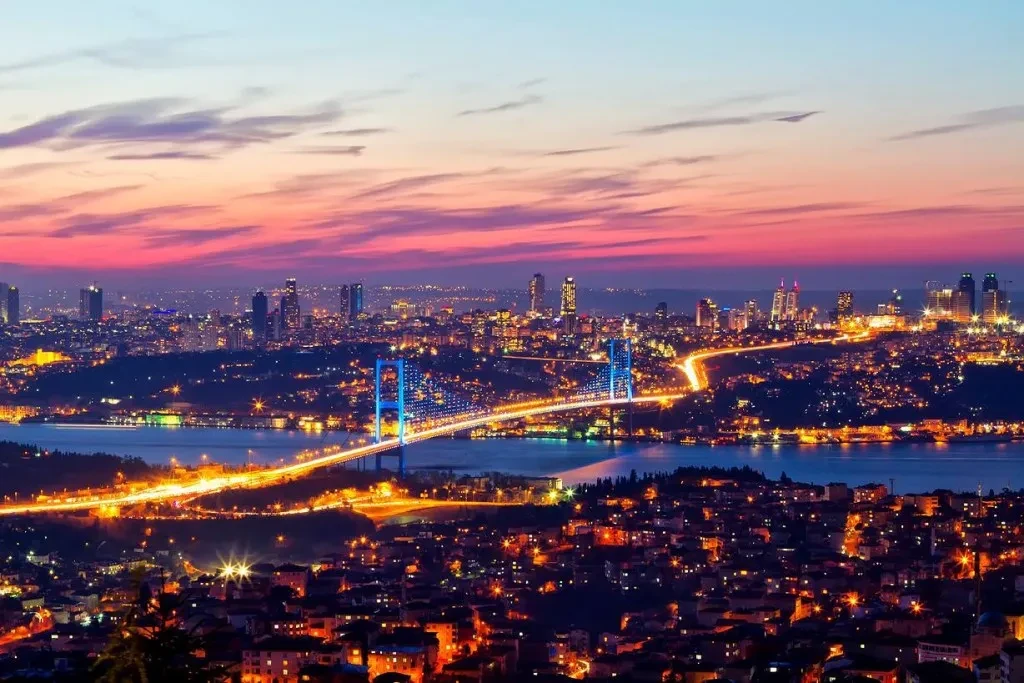
13- Bosphorus Cruise
Cruise the Bosphorus to view Istanbul’s skyline and landmarks, including Topkapi Palace, Dolmabahçe Palace, and Galata Tower, spanning Europe and Asia.
The Istanbul Turkey Day Tour gives a teaser at Istanbul's marvelous history; it leads one through jaw-dropping architecture alongside energetic everyday life. Istanbul hits the perfect blend between historical beauty with attractions like the Blue Mosque and the Hagia Sophia, scenic destinations such as Çamlıca Hill, yet modern recreation options become an essential fifth element into this list.
One can enter Istiklal Avenue and sip on a coffee at the Liberty Monument or get a bird's-eye view of the city at the Topkapı Palace terraces. Istanbul is busy and visits here will be memorable; they will remain unforgettable afterwards.



-webp.webp "10-Day Turkey Travel Packages for an Amazing Adventure")

-webp.webp)
-webp.webp)

-webp.webp)