

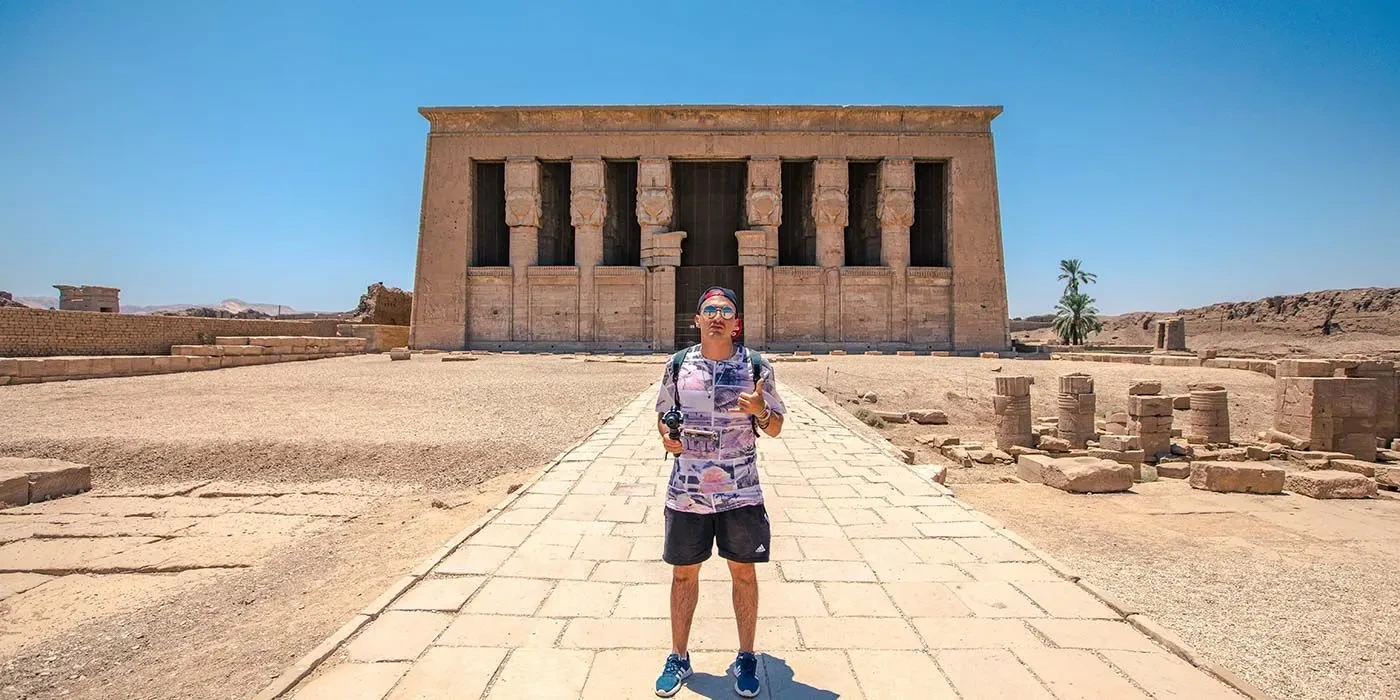
The awe inspiring Dendera Temple is one of those remarkable landmarks that travelers rarely overlook when embarking on Luxor tours. Set amid the fertile greenery of Upper Egypt, this extraordinary site is home to one of the most well-preserved temples from ancient Egyptian civilization. Dendera offers visitors a vivid glimpse into Egypt’s artistic brilliance, spiritual traditions, and architectural mastery. Renowned for its grand design and detailed reliefs, the temple remains a powerful symbol of the creativity and devotion of the ancient Egyptians.
Dendera sanctuary is set to a background of its attractive hieroglyphs and features that have been almost perfectly preserved. The temple is set up for worship the divine body of Hathor, the goddess of joy and love. The walls were most richly decorated with carvings showing deities, kings, forces for good, and the story-filled scenes illustrating mythological pathos. These temples are really worth taking a day off from the world and spending with ancients. There stands a lyrical and wistful place in its self-contained state of preservation and glorious essence-one that resounds in the deeply meditated eyes throughout time. Dendera is a must-visit for whoever is looking to explore further ancient temples, other than those in Karnak and Luxor. Next Holiday Travel provides a luxurious journey to this special sanctified place with a considerate guide illuminating the site for you, recounting its history and its importance on a Luxor day tour or even on a grand tour around Egypt. A temple at Dendera is another highlight in Luxor to leave a lasting impression by its beauty and history.
How to Get to Dendera Temple
Dendera is an ancient temple temple South of Dendera in the Northern Direction of Luxor, on the western bank of the Nile River. Surprisingly surrounded by fertile fields, this tranquil countryside is in stark contrast to the centuries-old stone walls of the temple. The site can be visited by self-drive or through organized tours from Luxor. The fact that Dendera is very unspoiled by the trappings of tourism is the reason visitors have been able to enjoy the tranquillity of the temple and its scenic surroundings to the fullest.
Explore the Wonders of Ancient Egypt
Traveling through ancient Egypt opens a fascinating window into the realm of pharaohs and gods. The journey starts at the Pyramids of Giza which serve as unchanging symbols of Egypt's everlasting heritage. The southern route leads to Luxor which contains numerous historical sites that include its majestic temples and royal tombs which host the exceptional Dendera Temple. The temple dedicated to Hathor includes its exceptionally preserved carvings and inscriptions. The Valley of the Kings and Karnak Temple serve as additional destinations which deepen the visitor experience while a Nile cruise shows how the sacred river influenced all aspects of ancient Egyptian life and culture and religious practice. Each stop along the way unfolds another chapter of Egypt’s glorious past which transforms your tour into an exciting and unforgettable educational experience.
The Story Behind Dendera Temple
The Dendera Temple presents an enchanting window of the ancient Egyptian religion and artistry. There were early construction fits dating between the late Ptolemaic period, around 225 BCE, and the Roman era. Throughout the composite accumulation of religious building and religious life, the temple presented what was Xenso-like architecture with the influence of traditional architecture. The presence of large tracts of surviving reliefs and its serenity in architecture is the primary reason for this temple being argued. All its images are testimony to the degree of accuracy attained during Roman Period sculpture-making as well as even the images of space a picture of a godly cosmos, rituals, and ceremonies depend upon the former ones.
One of its must-see rooms is the Chapel of Hathor, with marvellous reliefs, which house the famous Dendera Zodiac, referred to earlier the oldest known map of the heavens the Egyptians bequeathed. It formed a main center for worship and pilgrimage on and off for a few centuries. Today, by far, it is a monumental landmark in its field almost standing solitary-a building with nothing similar existing elsewhere. Maybe the perfect foundation of the temple design represents some of the spiritual and cultural life of Egypt.
The Role of Hathor in Ancient Egypt
Dendera Temple stands as a magnificent tribute to Hathor, the ancient Egyptian goddess of love, music, joy, and fertility. Built during the late Ptolemaic era, the temple is richly embellished with artwork celebrating her divine qualities. The Hathor Chapel is especially notable, featuring some of the temple’s most beautiful reliefs depicting the goddess in various forms often shown with a cow’s head or cow horns, symbolizing nurturing and abundance.
Among the temple’s most celebrated features is the Dendera Zodiac, a detailed representation of the heavens that highlights Hathor’s cosmic influence. Dendera remains one of the rare places where visitors can truly explore the worship of Hathor and gain insight into her vital role in ancient Egyptian belief and daily life.
Why Dendera Temple Stands Out Among Egypt’s Ancient Monuments?
Dendera Temple is among the most well-preserved ancient monuments in Egypt for several reasons. The temple was progressively constructed during late Ptolemaic and Roman times, taking advantage of advanced construction techniques and the use of sandstone, the latter material resistant to weathering over the centuries.
Its relatively secluded location kept urban encroachment at bay and left little human impact to tame its very deep carvings and reliefs. These factors cooperated in achieving little conservation in modern times and detail opposed for the edification of Dendera as an exemplification of ancient Egyptian artisanship and religion.
Exploring Dendera Temple’s Remarkable Ceiling
Dendera Temple ceiling is one noticeable feature of Egyptian ancient architecture. Unlike almost all temples, Dendera has a very interestingly adorned ceiling full of astronomic and mythological pictograms, in which the zodiac is best known for its illustrative patterns showing constellations and astrological symbols.
The decoration not only demonstrates immense artistic beauty but presents an excellent picture of ancient Egyptian science in the field of astronomy also; the brightness of Hathor and other deities symbolizes the association between the divine and the cosmos. This complex piece of work reflects how much Egyptians must have known about this universe and hence becomes the richly cultural asset at Dendera.
Discovering Ancient Egyptian Astronomy
The astronomy of the ancient Egyptians reveals their conflation of science, religion, and daily life. The Egyptians copiously noted the movements of stars and planets and regarded astronomy as crucial for their calendar making, agriculture, and cultic experiences. Temples like Dendera held this knowledge within both celestial symbols and star maps, and the best-known of these is the zodiac at Dendera.
Again, the alignment of temples and pyramids with cosmological events also proves the Egyptians’ highly advanced scientific understanding, showing the deep links between their spiritual beliefs and daily life.
How to Visit Dendera Temple from Luxor
The journey to Dendera Temple from Luxor allows visitors to explore the core of ancient Egyptian religious practices. The site which exists 60 kilometers north of Luxor displays excellent preservation of its complex which dedicates itself to Hathor through its stunning architectural features. The main areas of the building contain both the Dendera Zodiac and other carvings which demonstrate Egyptian knowledge about celestial bodies.
Visitors can experience peaceful times before the busy times start because early arrivals. The situation requires people to wear comfortable shoes and sunscreen while bringing sufficient drinking water. The presence of a skilled guide enhances the visit because he explains the historical background and hidden meanings of the temple. The site provides photographers with beautiful reliefs and tranquil natural environments. The Dendera day trip gives visitors a special chance to immerse themselves in Egypt's ancient history.
An Unforgettable Glimpse of Ancient Majesty
The Dendera Temple stands as one of Egypt's greatest ancient sites because its exceptional preservation makes it a top tourist destination. The site presents its stunning carvings and impressive building design which includes the Dendera Zodiac that displays the sacred and scientific achievements of ancient Egyptians. The temple dedicated to Hathor shows the people of this extraordinary culture their religious faith and their artistic traditions.
The Dendera Temple experience brings value to your Luxor tours which improves your entire time spent in Egypt for both your single day visits and your extended stays. The site maintains its peaceful atmosphere while it preserves its historical value which creates an experience that stays with visitors after they leave. The most enjoyable experience will result from your visit when you plan your time wisely by arriving early and drinking enough water and using guided tours. Your departure from Dendera will create a lasting impression through its artistic elements which connect you to Egypt's ancient cultural heritage.
Arriving early allows visitors to enjoy the peaceful atmosphere before crowds gather. Comfortable footwear, sun protection, and plenty of water are recommended. Hiring a knowledgeable guide greatly enriches the experience, bringing the temple’s history and symbolism to life. Photography enthusiasts will also appreciate the stunning reliefs and serene surroundings. A day trip to Dendera offers a rare opportunity to connect deeply with Egypt’s ancient past.



-webp.webp)
-webp.webp)

-webp.webp)