

The Al-Aqsa Mosque, with its stories of spiritual advancement, history, and culture, passes by more than it has to offer in the Muslim community. The mosque, which lies in the heart of Jerusalem on the revered Temple Mount, is considered the third holiest place of the Islamic faith, after Mecca and Medina. Historically, it ranks as the famous spot that Prophet Muhammad took to heaven during his fantastic Israa and Miraj, making this spot the very symbol of Islamic devotion. Also of immense historical, religious importance is a mosque of this nature; bodies of Jews, Muslims, and Christians converge here in Jerusalem. With its magnificent architecture, sanctified spaces, and centuries-old history, the Mosque draws worshippers and visitors from all over the world. A tour of the Holy Land is the ideal way to tie alohas to all these places and much more.
Al-Aqsa Mosque in Islamic Tradition
A Holy Sanctuary
Al-Aqsa Mosque is a revered symbol of faith for Muslims. Islamic tradition holds that Prophet Muhammad traveled here during the Isra and Mi’raj, beginning at the Kaaba in Mecca and ending at Al-Aqsa, from where he ascended to meet past prophets and receive divine instruction.
The First Qibla
Initially, Al-Aqsa served as the direction of prayer for early Muslims, known as the Qibla. Although the Qibla was later changed to Mecca, the mosque retained a profound spiritual importance, emphasizing the sanctity of Jerusalem in Islam.
A Center of Devotion
People who visit Al-Aqsa show their devotion through this highly respected act of worship. The pilgrimage to Mecca serves as an obligatory ritual but people consider it their highest form of devotion. Prophet Muhammad established three mosques as essential destinations for Muslims who wish to travel and perform their prayers: Al-Masjid al-Haram in Mecca, Al-Masjid an-Nabawi in Medina, and Al-Aqsa. This shows how important the site is for Muslims who practice their faith around the globe.
A Symbol of Peace
Al-Aqsa Mosque serves as more of an institution where individuals can reflect and pray in the compound and meet up with their community members. The structure has been in use over hundreds of years as an area where people can calmly study and meditate in the presence of God. That is why the place also becomes the symbol of the shared Islamic religion that unites Muslims in the entiire world.
Cultural and Political Significance
Al-Aqsa Mosque possesses deep cultural and political importance as a symbol of Palestinian identity and heritage. In a region teeming with conflicts, its essence has become symbolic of cultural preservation, religious rights, and resistance. To the larger Muslim community, Al-Aqsa remains a must-protect safe-haven site and the epitome of holiness for all times.
Architectural Treasures of Al-Aqsa Mosque
The Dome
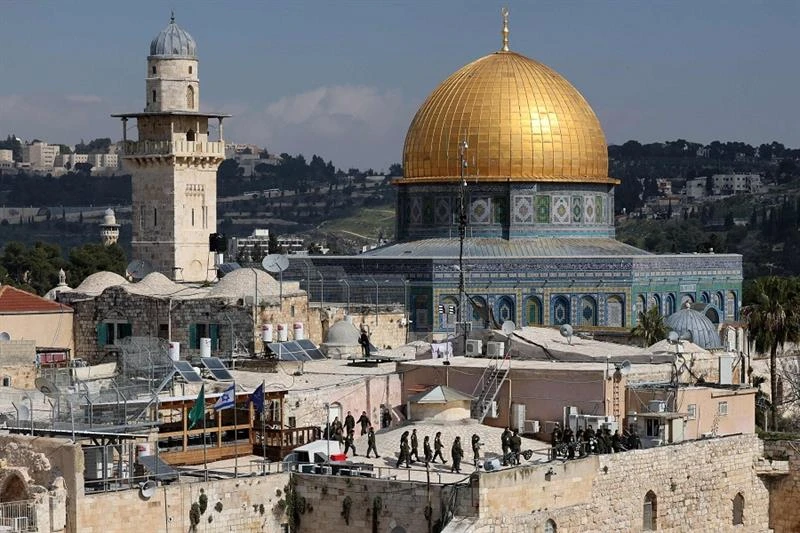
The mosque’s dome is one of its most iconic features. Al-Aqsa's dome appears in a subdued gray color which contrasts with the adjacent golden Dome of the Rock by exuding both dignity and peacefulness. The building design together with its courtyards and arcades creates an architectural unity that demonstrates Islamic design principles.
Courtyards and Arcades
The mosque’s capacious courtyards provide both visual beauty and practical utility because they create spaces for people to pray and meditate. People use the courtyards to enter the underground al-Marwani Mosque which displays its Islamic architectural design through its beautiful arcades and detailed columns.
Prayer Hall
Inside, the mosque’s prayer hall is designed for tranquility and focus. Its vaulted ceilings, detailed mosaics, and Islamic calligraphy create a serene environment. The hall accommodates thousands of worshippers, while carpets provide comfort during prayer.
Relation to the Dome of the Rock
Apart from the fact that the Dome of the Rock is not a mosque, both structures, hallowed to God, although in their spirituality and aesthetics do complement each other, together forming a stunning hallowed compound within al-Haram al-Sharif.
Layers of History
al-Aqsa mosques has undergone alterations over the centuries thanks to modifications from every reigning Islamic dynasty: the Umayyads, the Abbasids, the Fatimids, the Ayyubid, and the Ottomans. As a result, a patchwork of classical Islamic architecture was designed to become an outstanding example of Western and Byzantine influences.
Minarets and Exterior
The mosque contains four minarets which provide both aesthetic height and operational functions. The stone walls of the building display weathered characteristics which showcase both historical time periods and the skills of historical craftsmen through their carved details and decorative elements.
Exploring Al-Aqsa: A Visitor’s Guide
Appreciating Its Significance
Visitors must understand that Al-Aqsa holds great value because of its religious significance and its historical significance. The site functions as Islam's third most sacred location while it also represents Jerusalem's unified spiritual heritage which connects Islam with Christianity and Judaism.
Hours and Accessibility
The mosque allows Muslims to enter the building at all times during its daily prayer schedule. Non-Muslims may visit during designated hours, though access can vary due to security or political conditions. The mosque experiences its highest visitor numbers on Fridays, while other days provide a more peaceful experience.
Dress and Conduct
The dress code requires both respect and modesty from all individuals. Men must wear long pants and long sleeves, while women must cover their arms and legs and their hair. The mosque requires visitors to maintain silence and show respectful behavior in order to preserve its sacred atmosphere.
Exploring the Compound
The mosque forms part of the Haram al-Sharif with the Dome of the Rock and al-Marwani Mosque. It coats a visitor with the luxuriant compounds of spiritual reflection, architecture, and history.
Security Guidelines
The protection of this site is of the utmost importance and is under regular strict security, sometimes making it a place that requires prior registration to access. Restrictions may be applied depending on the security threats to non-Muslims.
Tour Guides
It is well worth taking a tour with a knowledgeable and independent guide who can fash, for you, a better understanding of the mosque's religious importance, architectural style, color, design, and form, and its historical memories.
The Al-Aqsa Mosque presents a timeless image of faith, history, and splendor in architecture with spiritual and cultural values drawing millions to its doors every year to become not just a scared Islamic site, but a bridge between religions and cultures. Visiting Al-Aqsa offers a vivid recreation through centuries of devotion, art, and heritage, leaving an everlasting image of awe, introspection, and harmony.
--webp.webp "Islamic Holy Land Tour – 5 Days, 4 Nights")

-webp.webp)
-webp.webp)

-webp.webp)